Services
Yard Spraying
Services
Miccar Aerial Ltd. is your trusted partner for professional yard spraying services in Saskatchewan.
Since 1996, we have been delivering unparalleled aerial application services in the South East Central part of Saskatchewan, including Yorkton.
Pricing
$1,000.00
per yard plus product
(up to 15 acres)
Want more information on common diseases and pests for our area?
Click the links below or scroll down to learn more about our control options and pest identification.
If you do not see something similar to what you have on your trees give us a call 1-306-786-3345, we have an extensive network of industry professionals that can assist us with pest identification and control techniques.
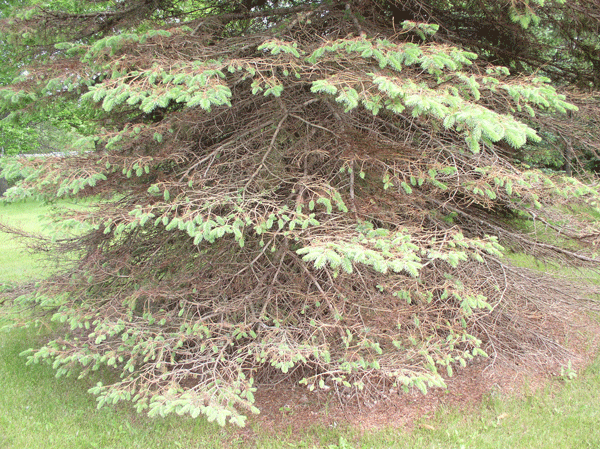
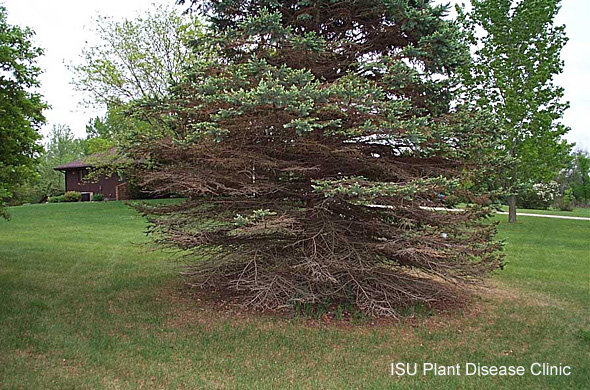
Rhizosphaera Needle Cast
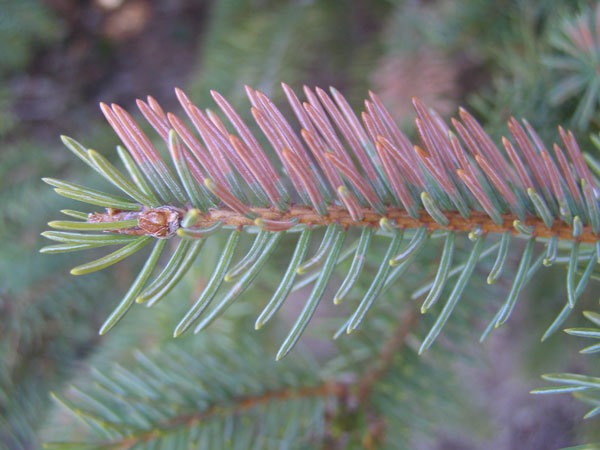
Do your spruce trees have brown needles or look like any of the photos below? Click here for more information.
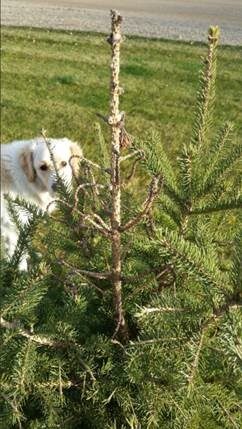
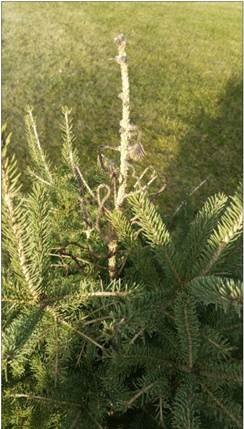
Pine Weevil (Pissodes Strobi)
In the photos below Pine Weevil is seen feeding on white spruce. For more information please click this link.
Yellow Headed Spruce Sawfly (Pikonema alaskensis)
The defoliation of the spruce trees below is most likely from the Yellow Headed Spruce Sawfly. For more information please click this link.
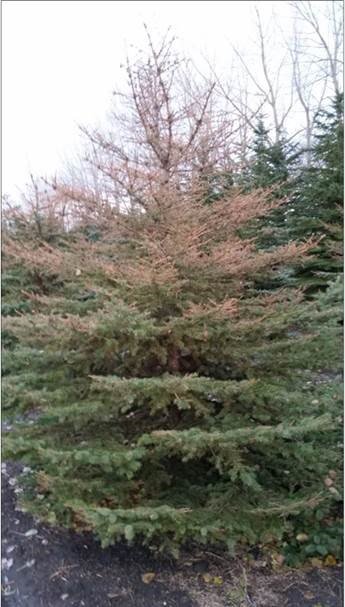
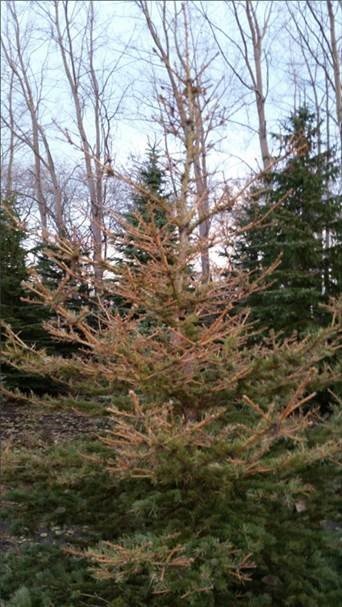
An Overview of Insects, Diseases and Environmental Stresses That Affect Conifer Plantings
Symptoms & Signs
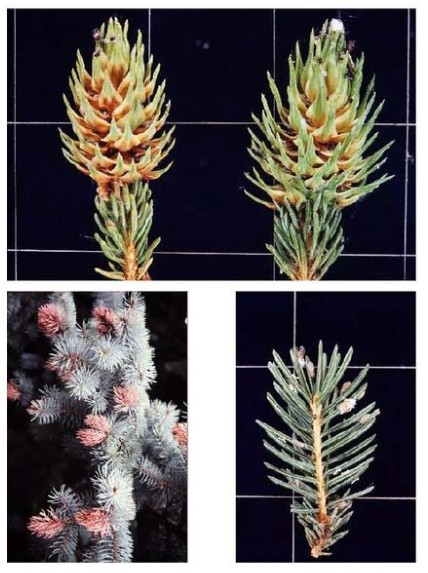
- Damage occurs in late May when the new growth of the branch tips form into cone-shaped galls
- The galls are green at first but later turn a reddish-purple color and may remain on the branched for several years.
- During a heavy infestation, young spruce may be severely deformed because the buds die on the gall-infested twigs. On established spruce, the growth and vigor may be reduced but trees are rarely killed
- Another form of the Cooley spruce gall adelgid produce white, cottony protective covers for their eggs. These cottony covers appear as white specks early in the spring and continue throughout the summer, and can cover an entire tree during a severe infestation
Where to Look
Examine the underside of needles for overwintering nymphs that could be covered by white wax (cottony tufts).
Management Options
- Some control may be achieved by picking the new galls off as they form and burning them. this will improve the tree’s appearance and reduce the aphid population
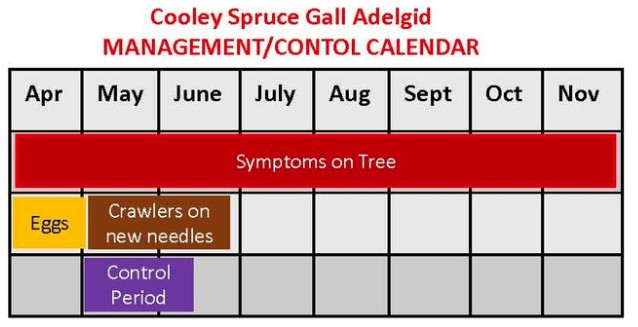
- Chemical control of the Cooley spruce gall adelgid can be achieved by applying carbaryl or malathion in early spring just as the buds begin to open.
Needle Cast Disease
A common problem encountered on spruce trees is needle browning. There are a number of possible causes, but a frequent problem is needle disease. Two fungi commonly observed in association with diseased needles in the prairies are Stigmina and Rhizosphaera needlecast. These fungi are most commonly encountered in association with diseased spruce in the prairies. Needle disease can be a significant problem in Christmas Tree plantations, where it can greatly reduce the attractiveness and the value of the trees, but can also be a concern in shelterbelts and urban landscapes.
Symptoms
Infections result in narrow yellow bands. When the needles are examined, tiny black fruiting bodies can be seen replacing the normally white stomates of the needle and arranged in lines along the length of the needle (Fig 1,2). Both Stigmina and Rhizosphaera produce similar symptoms and close examination with a magnifying lens is needed to determine positively which fungus is present. Fruiting bodies of Stigmina appear fuzzy or feathery (Fig 1) whereas fruiting bodies of Rhizosphaera appear spherical or rounded and smooth (Fig 2). The fruiting bodies can be observed on needles that are still green and needles that are in process of discolouring or dead needles.
Symptoms of needlecasts appear in the spring following infection, with infected inner (2nd year) needles turning yellow, then purplish-brown by end of summer (Fig 3,4). Repeated infections will cause trees to begin having a sparse looking interior and after 3–4 years of severe infection, branches may begin to die.
With a disease cycle that lasts longer than one season, disease management is a challenge. Infection usually takes place in the spring with symptoms not becoming visible for a full year or longer. Thus an outbreak of symptoms this year is actually the result of suitable conditions and infection in the spring of the previous year. Years with greater than normal spring rainfall are favourable for needlecasts. Under high disease pressure, loss of needles on entire branches and multiple branches is possible.
Cultural Management
Disease threshold: The threshold of acceptable disease should be determined when evaluating whether disease management actions should be implemented. The threshold differs depending on the expected tree function. A specimen tree may be expected to maintain a full complement of green needles, while trees in a shelterbelt may achieve their function with substantial needle loss and some branch death. Needle loss that causes sustained growth reduction threatens the long-term health of a tree.
Cultural Control: Management of needlecast can be difficult. To reduce the spread of Rhizosphaera or Stigmina needlecast, avoid pruning or shearing trees during wet weather and sterilize pruning tools frequently by dipping in 70% alcohol. Remove any severely infected branches and rake fallen needles from the base of trees where practical. Promote good air circulation and encourage rapid drying of foliage by mowing weeds or other vegetation near trees.
Ensure adequate spacing between trees and facilitate air movement to promote needle drying by pruning lower branches of spruce trees, and ensure that irrigation water does not wet trees artificially. Removal of severely infected trees or severely infected branches will reduce the source of spores causing new infections.
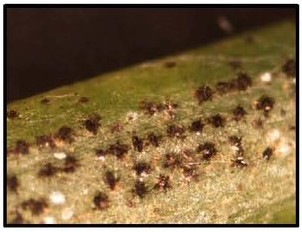
Above: Needle infected with Stigmina with fuzzy black pycnidia. Photo courtesy of University of Illinois
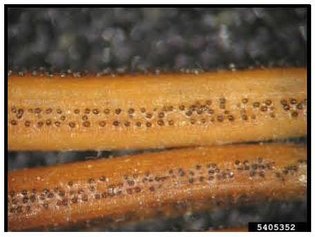
Above: Needle infected with Rhizosphaera kalkhoffii with smooth black pycnidia. Photo courtesy of Paul Bachi, University of Kentucky Bugwood.com
CHEMICAL CONTROL
Chemical control – For landscape trees, shelter belts and Christmas tree plantations, needles should be protected for two months after bud break. Spraying should occur every year to ensure that four or more age classes of green needles are retained on trees.
In Canada, two fungicides with active ingredient of copper oxychloride have a general registration for needlecast diseases and several other fungicides have registration specifically for control of Stigmina or Rhizosphaera. Apply as per label instructions beginning in spring when new shoot growth is 1 to 5 cm in length, and again several times at 3-4 week intervals until conditions no longer favour disease development.
List of Products registered in Canada for use against needle diseases of spruce in general or specifically for Stigmina or Rhizosphaera.
| Fungicide Active Ingredient | Trade Name | Disease Controlled | Registration |
|---|---|---|---|
| chlorothalonil | Bravo Ultrex | Rhizosphaera | commercial |
| Bravo Ultrex 90 SDG | Rhizosphaera | commercial | |
| Daconil 2787 | Rhizosphaera | commercial | |
| Daconil 720 | Rhizosphaera | commercial | |
| Echo 720 | Rhizosphaera | commercial | |
| Echo 90DF | Rhizosphaera | commercial | |
| copper oxychloride | Copper oxychloride 50 | needlecast diseases | commercial |
| Copper Spray | needlecast diseases | commercial | |
| propiconazole | Banner MAXX*** | Rhizosphaera, Stigmina | commercial |
| trifloxystrobin | Flint*** | Rhizosphaera, Stigmina | commercial |
All products registered for commercial purposes are intended for use by commercial applicators only, not by individual homeowners. There are currently no products for needle disease with domestic registration for application by individual homeowners.
*** For use in Christmas tree plantations only, not for use on ornamental trees.
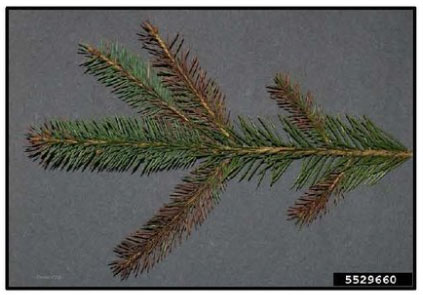
Above: Rhizosphaera Needle Cast. Photo courtesy of Bruce Watt, University of Main, bugwood.com
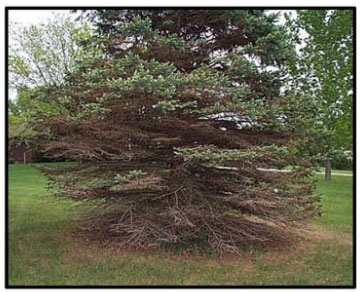
Above: Colorado Spruce with needle cast damage. Photo courtesy of Iowa State University
Prairie Tree Pests
Pine Needle Scale (Chionaspis pinifoliae)
Affected trees: Scots pine, Colorado spruce, white spruce and other pines and spruces.
SYMPTOMS AND SIGNS
- The insect causes injury to the needles by sucking out the sap. Severe infestations often cause all the foliage except the current year’s growth to turn yellow, and trees of low vigour are sometimes killed.
- In severe cases yellow spots merge, needles drop prematurely and the tree assumes a dull, unhealthy appearance.
- A severe infestation would be 20 or more scales per spruce needle and 50 or more per pine needle.
- Trees with repeated heavy infestations have reduced vigor and annual growth and become more susceptible to secondary insects.
CONTROL OPTIONS
- Lady beetles, parasites and weather contribute to the natural control of the scale. When natural controls fail, serious damage can be prevented by applying insecticides.
- Insecticides recommended include: dimethoate, malathion, diazinon or carbaryl.
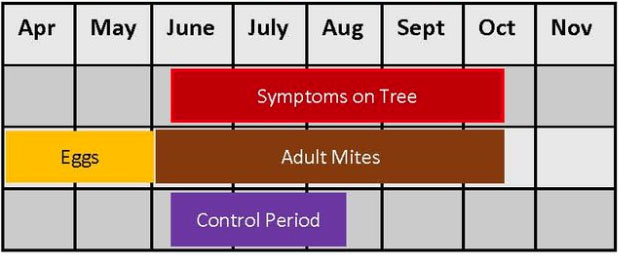
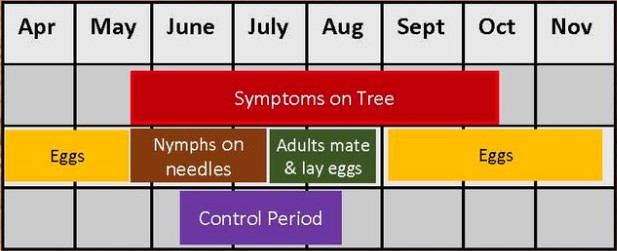
- Two applications may be required; once in mid-June when nymphs are unprotected and searching for feeding sites, and a second in early August to control the females before they produce their protective scale covering.
Pine Needle Scale Management / Control Calendar
WHERE TO LOOK
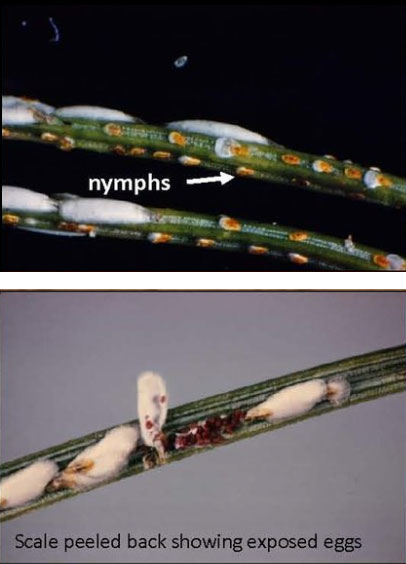
Needles become covered with the white scale insects.
LIFE CYCLE
Pine needle scale is a microscopic insect that overwinters as an egg under the scale formed by the mother.
Reddish-colored eggs overwinter beneath the female scales. In May to June, nymphs hatch and then migrate to new locations by crawling or being blown by the wind.
The nymphs settle, begin feeding, and produce a waxy, scale covering. During late July and early August, mating takes place, and eggs are laid under the scale for next year’s generation.
There is one generation per year.
Spruce Budworm
The spruce budworm (Choristoneura fumiferana) mostly attacks primarily white spruce and balsam fir but will also attack Colorado blue spruce. Repeated infestations over several years will reduce tree vigour and cause some top-kill.
APPEARANCE AND LIFE HISTORY
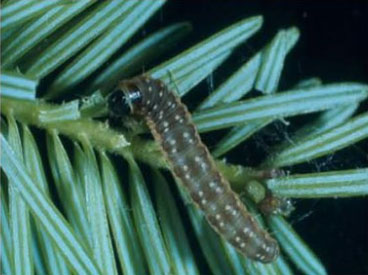
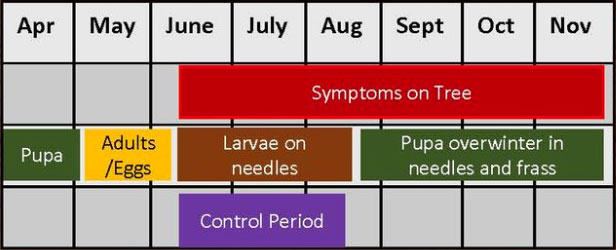
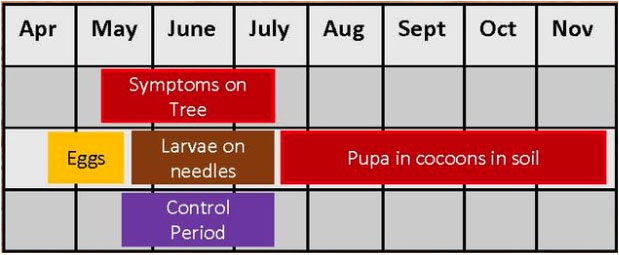
In July to early August, every spruce budworm moths deposit about 100 eggs each, in clusters of 15 to 50 on the underside of needles. Within two weeks, larvae emerge and begin to construct overwintering shelters of silk. The larvae do not feed prior to overwintering. Shortly before the buds begin to expand in the spring, the small larvae begin feeding on old needles. As the buds break the larvae move to the new succulent needles and feed for 3 to 5 weeks. Full grown larvae are 20 to 25 mm in length and have a shiny dark-brown head and a reddish-brown body with whitish or yellowish spots. Pupation occurs within the trees, with adults emerging in about 10 days. The budworm has one generation per year.
DAMAGE AND CONTROL
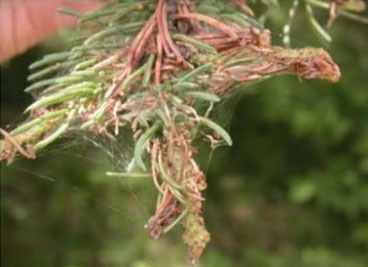
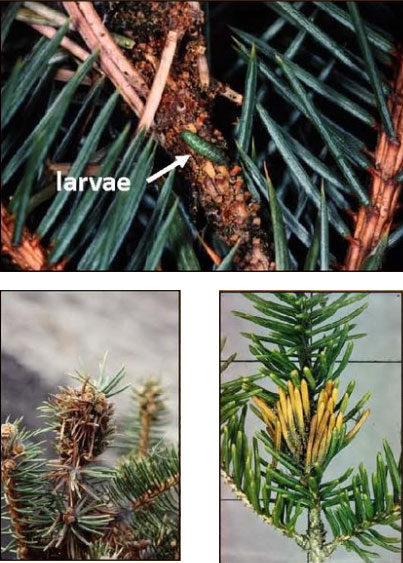
Damage: Initially, the larvae mine the previous year’s needles and cause minimal damage. When the larvae move to the new needles, they form protective shelters by tying the needles and developing shoots together with webbing. Each larva may construct several shelters during their development. Damage is often most noticeable in the crowns of the trees where the foliage appears reddish-brown and scorched. The larvae are wasteful feeders and leave dried, partially consumed needles on the trees. During severe infestations, the budworm can completely defoliate all new foliage along with some old needles. Repeated severe infestations can kill the tops of the trees in 3 years and whole trees in 5 years.
Control: Spruce budworm populations are generally regulated by natural factors and require control only during epidemic outbreaks. Where practical, hand pick the larvae from the tree early in the season. Insecticides registered for budworm control include: Bacillus thuringiensis (italicize), dimethoate, malathion and trichlorfon. These products are also registered for aerial application.